Home Blog Page 21

Cybercriminal linked to multimillion-dollar ransomware attacks sentenced for fraud schemes

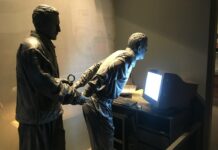
"Arresting a cybercriminal for mail fraud" by Eric Fischer is marked with CC BY 2.0.

An Estonian man has been sentenced to 66 months in prison for his years-long role in furthering and facilitating computer intrusions, the movement of fraudulently obtained goods and funds, and the monetization of stolen financial account information. He also participated in ransomware attacks causing over $53 million in losses and was ordered to pay over $36 million in restitution.

According to court documents, Maksim Berezan, 37, of Estonia, who was apprehended in Latvia and extradited to the United States, pleaded guilty in April 2021 to conspiracy to commit wire fraud affecting a financial institution and conspiracy to commit access device fraud and computer intrusions. Berezan was an active member of an exclusive online forum designed for Russian-speaking cybercriminals to gather safely and exchange their criminal knowledge, tools, and services. From 2009 through 2015, Berezan not only furthered the criminal aims of the forum, but he also worked closely with forum members and other cybercriminals for purposes of obtaining and exploiting stolen financial account information.

“This case is a prime example of how the Department of Justice can leverage its traditional tools – criminal investigations and prosecutions – to combat ransomware,” said Assistant Attorney General Kenneth A. Polite Jr. of the Justice Department’s Criminal Division. “Many of the world’s ransomware players began as fraudsters engaged in other types of online crimes, and this case demonstrates that their crimes will catch up to them. The United States is committed to working with its international partners to hold cybercriminals accountable.”

“Cybercrime has become increasingly more sophisticated, but so have our methods for combatting it,” said U.S. Attorney Jessica D. Aber for the Eastern District of Virginia. “Ransomware attacks are devastating to people and organizations alike, and we have honed our strategies and techniques to target both the individual actors who perpetrate these attacks and the networks that support them. This case is just one example of how EDVA and the Justice Department are tackling this threat.”

“The Secret Service remains committed to ensuring that modern conveniences of today that facilitate our lawful transactions and economic health are not leveraged by criminals for illicit activity and personal gain,” said Special Agent in Charge Matthew Stohler of the U.S. Secret Service. “While we have long been in the business of protecting money, from the earliest days of coins and paper, to plastic, and today’s more accessible and commonplace digital currencies, we also remain in parallel footprint to the evolution of criminal behavior into cyberspace. Ransomware thieves are not safe in any dark corner of the internet in which they may think they can hide from our highly trained investigators and law enforcement partners worldwide. Together with our critical partners we are dedicated to protecting the public and securing every iteration of our money and every part of our national financial infrastructure.”

According to court documents, following Berezan’s arrest, investigators uncovered within his electronic devices evidence of his involvement in ransomware activities. The post-extradition investigation determined that Berezan had participated in at least 13 ransomware attacks, seven of which were against U.S. victims, and that approximately $11 million in ransom payments flowed into cryptocurrency wallets that he controlled. Berezan used his ill-gotten gains to purchase two Porsches, a Ducati motorcycle, and an assortment of jewelry. In addition, authorities recovered from Berezan’s residence currency worth more than $200,000 and electronic devices storing passphrases to bitcoin wallets that contained bitcoin worth approximately $1.7 million, which has been forfeited.

Assistant Attorney General Kenneth A. Polite Jr. of the Justice Department’s Criminal Division; U.S. Attorney Jessica D. Aber for the Eastern District of Virginia; Special Agent in Charge Matthew Stohler of the Washington Field Office of the U.S. Secret Service and Special Agent in Charge Jason Kane of the Criminal Investigative Division of the U.S. Secret Service made the announcement.

Senior Trial Attorney Laura Fong and Trial Attorney Alison Zitron of the Criminal Division’s Computer Crime and Intellectual Property Section, and Assistant U.S. Attorneys Alexander P. Berrang, Jonathan Keim, and Zoe Bedell of the Eastern District of Virginia prosecuted the case.

The Justice Department’s Office of International Affairs provided vital assistance. The Department of Justice extends its gratitude to authorities in Estonia and Latvia for their significant cooperation and assistance, in particular, the Latvian State Police and Estonian Police.

Press release distributed by the DOJ.

Featured image: “Arresting a cybercriminal for mail fraud” by Eric Fischer is marked with CC BY 2.0.

Takeover Bid of Fortune 500 Company was a Sham, SEC claims

"Stock Exchange" by Travel Aficionado is marked with CC BY-NC 2.0.

The Securities and Exchange Commission has charged Melville ten Cate, a U.S. citizen residing abroad, with fraud stemming from his allegedly phony offer to purchase Textron – a large U.S.-listed aircraft, defense, and industrial company.

The SEC’s complaint, filed in federal district court in Manhattan, alleges that on November 9, 2020, ten Cate and Xcalibur Aerospace, Ltd., a now-defunct private company ten Cate controlled, placed an advertisement in The New York Times announcing a proposed purchase of all existing stock of Textron for $60.50 a share, a 56 percent premium over the stock’s previous closing price. As alleged, the advertisement led to a spike in Textron trading and a subsequent trading halt. The SEC has charged ten Cate with violating the antifraud provisions of the federal securities laws.

According to the complaint, the announcement was false and misleading because ten Cate and Xcalibur lacked the financial resources to complete the transaction, which would have required more than $14 billion. The tender offer announcement allegedly described Xcalibur’s corporate parent as a ‘diversified global investment company,’ when it had no operations or assets and had been deactivated for failure to pay taxes. The complaint alleges that the announcement failed to disclose that ten Cate and entities he controlled had been the subject of multiple bankruptcy and default judgments and that Textron had previously rejected Xcalibur’s overtures. The SEC’s investigation also allegedly confirmed that the defendant attempted to access the Commission’s online Electronic Data Gathering and Retrieval (EDGAR) system in order to complete the required process for a public filing but was thwarted by SEC officials.

“We allege that the defendant, ten Cate, pretended to run a financially viable business while leaving a trail of bad debts that included never paying for the very advertisement that announced the fictitious offer,” said Carolyn Welshhans, Associate Director of the SEC’s Division of Enforcement. “The SEC will continue to pursue those who disrupt our markets and spread materially misleading information to investors through the media or the SEC’s EDGAR system.”

The SEC is seeking permanent and conduct-based injunctions, a penalty, and an officer and director bar. In a parallel action, the U.S. Attorney’s Office for the Southern District of New York today announced criminal charges against ten Cate.

The investigation was conducted by Edward Reilly and Brian Vann and supervised by Amy Friedman and Ms. Welshhans. The litigation will be conducted by Duane Thompson and supervised by Melissa Armstrong. The SEC appreciates the assistance of the U.S. Attorney’s Office for the Southern District of New York and U.S. Department of Homeland Security.

Press release distributed by the SEC.

Featured image: by Travel Aficionado is marked with CC BY-NC 2.0.

Current and former pro-athletes charged in multimillion-dollar sport gambling business

"MGM Sports Book" by relux. is marked with CC BY-NC-SA 2.0.

LOS ANGELES – Federal authorities today announced a series of cases stemming from an illegal gambling operation that involved current and former professional athletes, some of whom assisted with the business and others who placed large bets on games.

In documents unsealed Wednesday in United States District Court, the principals of the operation agreed to plead guilty to conspiracy charges and admitted they took in millions of dollars in bets, many of which were facilitated by a Costa Rica-based gambling website. One of the leaders of the scheme also admitted that he failed to report to the IRS nearly $1.5 million in income he received from the gambling scheme over two years.

The owner of the online gambling business and website pleaded guilty earlier this month and admitted the business was illegal under California law because it involved at least five people, operated for at least six years, and often had gross revenue of well over $2,000 on a single day.

Four new cases and related plea agreements were unsealed this week against:

  • Wayne Nix, 45, of Newport Coast, a former minor league baseball player, who was charged with one count of conspiring to operate an illegal sports gambling business, and one count of filing a false tax return;
  • Edon Kagasoff, 44, of Lake Forest, Nix’s longtime partner in the operation, who was charged with one count of conspiring to operate an illegal sports gambling business;
  • Howard Miller, 63, of Gardena, who was charged with one count of aiding and abetting the operation of an illegal sports gambling business by assisting in the collection and payout of gambling proceeds related to the Costa Rica-based website; and
  • Celebrity Financial LLC, dba Sherman Oaks Check Cashing, which was charged with failing to maintain an effective money laundering program related to it cashing at least $18 million in checks from the illegal sport gambling business at its San Fernando Valley check cashing store.

Representatives of Celebrity Financial appeared in court on March 28. Nix made his first court appearance Wednesday afternoon, and he is scheduled to formally enter his guilty plea on April 11. Miller has agreed to appear in court this afternoon, and Kagasoff has agreed to appear in court on Friday.

The Justice Department also announced that earlier this month the court unsealed cases against two other defendants:

  • Kenneth Arsenian, 52, of Newport Beach, who pleaded guilty on January 26 to four charges: operating an illegal sports gambling business, filing a false tax return, money laundering, and accepting a financial instrument for unlawful internet gambling; and
  • Joseph Castelao, 56, of Rancho Palos Verdes, the owner of the gambling website – Sand Island Sports – who pleaded guilty on March 15 to operating an illegal gambling business.

According to the court documents made public this week, Nix began operating a bookmaking business about 20 years ago. Through his contacts in the sports world, Nix developed a client list that included current and former professional athletes, and he employed three former Major League Baseball players to assist with the business.

Kagasoff joined Nix in the gambling operation around 2014, and they used an online infrastructure and calling center operated by Sand Island Sports to create accounts for bettors, according to court documents, which note that Nix and his associates paid winning bets and retained nearly all of the money collected from bettors.

Nix’s plea agreement outlines specific incidents related to the betting scheme, including receiving payments for gambling losses from a professional football player, a Major League Baseball coach and a baseball analyst. The plea agreement also discusses a bettor who wagered $1 million a year with Nix’s operation, a $5 million bet on the 2019 Super Bowl, and a sports broadcaster who told Nix he was going to refinance his home to pay off gambling debts.

In relation to the tax count against him, Nix admitted receiving $1,466,947 in income that he failed to report on his 2017 and 2018 federal income tax returns. In his plea agreement, Nix agreed to pay all back taxes due for those years – a total of $1,248,429, which includes the back taxes, penalties and interest. Nix also agreed to forfeit to the government nearly $1.3 million seized in February 2020 from two bank accounts and two brokerage accounts he controlled.

When Arsenian pleaded guilty in January, he admitted failing to report to the IRS more than $2.8 million in income for the years 2015 through 2018. Arsenian has agreed to pay $1.1 million in back taxes, plus additional penalties and interest. Arsenian also agreed to forfeit $341,459 in United States currency seized from his residence in February 2020.

In its plea agreement, Sherman Oaks Check Cashing admitted that it encouraged customers to bring large business checks – far in excess of the $10,000 that normally triggers a Currency Transaction Report (CTR) to federal authorities – and employees of the company told customers that it would not file CTRs. As a result, many of its customers brought checks that were proceeds of unlawful activity, including two customers of the gambling operation who cashed at least $18.35 million in checks. Sherman Oaks Check Cashing admitted that it made at least $500,000 in profits by engaging in this activity. In its plea agreement, the company agreed to pay a $500,000 fine, which is the maximum penalty under the law.

Homeland Security Investigations (HSI) and IRS Criminal Investigation are conducting the ongoing investigation in this matter. The HSI agents are part of the El Camino Real Financial Crimes Task Force.

Assistant United States Attorneys Jeff Mitchell of the Major Frauds Section and Dan Boyle of the Asset Forfeiture Section are prosecuting these cases.

Press release distributed by the DOJ.

Featured image: “MGM Sports Book” by relux. is marked with CC BY-NC-SA 2.0.

District Court Orders New Jersey Company to Stop Distribution of Adulterated Pet Food Contaminated with Salmonella

"Dog Park_2009-03-03_IMG_5246.JPG" by Jim's Photos1 is marked with CC BY-NC 2.0.

A federal court this week ordered a Carneys Point, New Jersey company to stop distributing adulterated pet food in violation of the Federal Food, Drug and Cosmetic Act (FDCA).

In a complaint filed March 15, the United States alleged that Bravo Packing Inc., and its owners and operators, Joseph Merola and Amanda Lloyd, violated the FDCA by distributing adulterated animal food and by causing animal food to become adulterated while held for sale. The complaint alleged that samples collected during U.S. Food and Drug Administration (FDA) inspections of the Bravo facility in July 2019 and April 2021 contained Salmonella, a pathogenic microorganism that can cause the illness known as salmonellosis in both humans and animals. Salmonella can be transferred from animal food to humans through handling of the food, or directly from infected animals to humans. Salmonellosis can cause symptoms such as diarrhea, fever and abdominal cramps that last several days in healthy adults. Absent prompt treatment, salmonellosis can cause severe dehydration and even death in infants, young children, the elderly, transplant recipients, pregnant women and individuals with weakened immune systems.

“Animal food manufacturers must ensure that their products are safe,” said Principal Deputy Assistant Attorney General Brian M. Boynton, head of the Justice Department’s Civil Division. “The department will continue to work closely with the FDA to ensure that pet food is manufactured in compliance with the law.”

“The food we give our pets should be safe for them to eat and safe for people to handle,” said Director Steven Solomon, DVM, MPH of the FDA’s Center for Veterinary Medicine. “The FDA has taken this action to protect public health because, despite multiple inspections, notifications of violations and recalls, this firm continued to operate under insanitary conditions and produce pet food contaminated with harmful bacteria. We will not tolerate firms that put people or animals at risk and will take enforcement actions when needed.”

The defendants agreed to settle the suit and be bound by a consent decree of permanent injunction. The negotiated consent decree requires, among other things, that the defendants stop receiving, processing, manufacturing, preparing, packing, holding and distributing adulterated pet food until they take specific remedial measures and demonstrate to the FDA that they will comply with federal law.

The government was represented by Trial Attorney Noah T. Katzen of the Civil Division’s Consumer Protection Branch, with the assistance of Tara Boland of the FDA’s Office of Chief Counsel. The U.S. Attorney’s Office for the District of New Jersey also provided assistance.

Additional information about the Consumer Protection Branch and its enforcement efforts may be found at http://www.justice.gov/civil/consumer-protection-branch.

Press release distributed by the DOJ.

Featured image: “Dog Park_2009-03-03_IMG_5246.JPG” by Jim’s Photos1 is marked with CC BY-NC 2.0.

Hadari Oshri sued for copyright infringement in 2017

In 2017, Hadari Fashion Power House, Incorporated was sued for copyright infringement by Star Fabrics, Incorporated.


AN IMPORTANT NOTE: On June 22, 2021, Hadari Oshri –Marc Lubaszka’s business partner– filed a frivolous civil harassment restraining order (CHRO) against Investor News reporter Aitana Vargas to stop the publication of her investigative series “A Special Report: The Harrowing Impunity of White-Collar crime,” and any subsequent installments or future media coverage. On August 3, 2021, Vargas filed an anti-SLAPP motion to strike Oshri’s CHRO petition. In a hearing held on September 13, 2021, Los Angeles Superior Court Judge Doreen Boxer granted Vargas’s anti-SLAPP motion and denied Oshri’s civil harassment petition for failure to sustain the applicable burden of proof. Oshri will now have to pay Vargas’s attorney’s fees for filing a frivolous case. The Israeli entrepreneur also declined to go on a recorded interview or provide statements via email.

Oshri’s “Hadari Power Fashion House, Inc.” is no longer active

California – One of Hadari Oshri’s now-defunct companies, Hadari Power Fashion House, Inc., was sued in 2017 for copyright infringement, according to court documents obtained by this outlet.
The complaint, filed by CA-based Star Fabrics, Inc. also names Azules and Perfect Ink, Inc. as defendants and alleges that Oshri’s company sold an item under the brand Azules indicating that it was manufactured by or for Azules.
The complaint states that Hadari Power Fashion House, Inc. and the other two defendants manufactured, distributed and/or sold fabric and/or garments featuring a design that was “either identical or substantially similar” to the one registered with the United States Copyright Office by plaintiff Star Fabrics without the latter’s authorization.
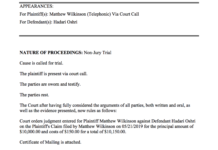
*Read the complaint against Hadari Power Fashion House here.
A complaint filed against Hadari Power Fashion House, Inc. accused the company of copyright infringement.
By creating, distributing and/or selling derivative works through a nationwide network of retail stores, catalogues, and through on-line websites, each of the defendants infringed Star Fabrics’s copyrights, the complaint states.
The document further alleges that the defendants had “actual or constructive knowledge” of the plaintiff’s rights and that their acts were “willful, intentional and malicious.”
Star Fabrics asked for all profits of defendants, all losses incurred, statutory damages and attorneys’ fees.
The case was filed in the Central District of California on April 19, 2017. In July that year, Judge Fernando M. Olguin gave Star Fabrics until July 31, 2017 to serve defendant Hadari Power Fashion House, Incorporated and deliver proof of service by August 2, 2017.
Court records show that on July 13, 2017 the plaintiff filed a notice of settlement with Perfect Ink, Incorporated. On August 1, 2017, Star Fabrics dismissed the case against the other two defendants.
Hadari Power Fashion House, Inc. was created in 2016 and its current status is “SOS/FTB Suspended.”
Oshri is the managing director of Trade Safe Pro, LLC and, along with her partner Patrick Seller, one of the principals of A1A Management, Inc., a company formed in Montana and registered at a luxurious beachfront Malibu condo, just like Trade Safe Pro.
A months-long exposé published on this outlet revealed Oshri’s alleged participation in a joint PPE scheme with conman Marc Lubaszka. The entrepreneurs used Lubaszka’s Fly Private X – whose VP was rapper Dylan Raw – to try to sell millions of dollars worth of PPE that they allegedly didn’t possess. The jet company’s official website went “under construction” following the release of part one of the investigative series and misrepresented that they had fleets of private jets that nobody has seen to this date.
Do you have a newsworthy story idea? Have you been SLAPPED? Contact the newsroom at info@investornews.io and share your story with us.

RELATED COVERAGE

Read Hadari Oshri loses anti-SLAPP court battle against journalist Aitana Vargas.

Read Hadari Oshri’s losses mount up as she fails again to silence her victims.

Read La reportera Aitana Vargas pide 23.000 dólares en honorarios tras pulverizar la querella mordaza de Hadari Oshri.

Read Hadari Oshri deactivates LinkedIn account following PPE exposé.

Read “A Special Report: The Harrowing Impunity of White-Collar Crime (Part I): Marc Lubaszka, the ultimate white-collar conman on the run: From a Hollywood Hills mansion to Venezuela’s illegal gold mines and back.” 

Read “A Special Report: The Harrowing Impunity of White-Collar Crime (Part II): Marc Lubaszka’s nonexistent private jets failed to deliver PPE amid the COVID-19 pandemic.”

Read “A Special Report: The Harrowing Impunity of White-Collar Crime (Part III): Pursuing flash money, rapper Dylan Raw partners with conman Marc Lubaszka and becomes his patsy.”

Read “A Special Report: The Harrowing Impunity of White-Collar Crime (Part IV): Hadari Oshri allegedly linked to attempted $370M nonexistent PPE COVID-19 scheme.”

Last update: April 2, 2022.

Physician convicted for unlawfully prescribing over 1 million opioid pills

"Clariant Medical Masterbatches" by Clariant International Ltd. is marked with CC BY-NC-ND 2.0.

A Texas physician has been convicted for unlawfully prescribing more than one million pills of the opioid hydrocodone.

According to court documents and evidence presented at trial, James Pierre, 52, a doctor, of Houston, unlawfully prescribed controlled substances from June 2015 through July 2016 to individuals posing as patients at West Parker Medical Clinic (West Parker), a pill-mill clinic located in Houston.

Trial evidence showed that Pierre, along with his physician assistant, issued unlawful prescriptions for hydrocodone and carisoprodol, a combination of controlled substances known as the “Las Vegas Cocktail,” to hundreds of individuals posing as patients each week. So-called “runners” brought numerous people to pose as patients at West Parker and paid approximately $220 to $500 in cash for each visit that resulted in prescriptions for dangerous drugs. Throughout the scheme, West Parker made approximately $1,750,000 from prescriptions, and over $300,000 went to Pierre.

Pierre was convicted of one count of conspiracy to unlawfully distribute and dispense controlled substances and seven counts of unlawfully distributing and dispensing controlled substances. He is scheduled to be sentenced on June 27 and faces up to 20 years in prison for each count. A federal district court judge will determine the sentence after considering the U.S. Sentencing Guidelines and other statutory factors.

To date, one co-conspirator has pleaded guilty to conspiracy to unlawfully distribute controlled substances.

Assistant Attorney General Kenneth A. Polite Jr. of the Justice Department’s Criminal Division; U.S. Attorney Jennifer Lowery for the Southern District of Texas; and Special Agent in Charge Daniel C. Comeaux of the DEA’s Houston Division made the announcement.

DEA Houston investigated the case.

Trial Attorney John-Alex Romano of the Criminal Division’s Human Rights and Special Prosecutions Section and Trial Attorney Maryam Adeyola of the Criminal Division’s Fraud Section are prosecuting the case. Assistant U.S. Attorney Jon Muschenheim of the Southern District of Texas is handling forfeiture.

Press release distributed by the DOJ.

Featured image: “Clariant Medical Masterbatches” by Clariant International Ltd. is marked with CC BY-NC-ND 2.0.

Former Coal Company VP Charged with Foreign Bribery, Money Laundering and Wire Fraud

"Coal Reclaimer" by cypheroz is marked with CC BY-NC-ND 2.0.

A former coal company executive was arrested today on charges of violating the Foreign Corrupt Practices Act (FCPA), laundering funds, and receiving kickbacks as part of an alleged scheme to pay bribes to government officials in Egypt in connection with contracts with an Egyptian state-owned and state-controlled company, Al Nasr Company for Coke and Chemicals (Al Nasr).

The seven-count indictment alleges that Charles Hunter Hobson, 46, of Knoxville, Tennessee, engaged in the bribery and money laundering scheme between late 2016 and early 2020. During part of that time, Hobson was the Vice President of a coal company in Pennsylvania (referenced as Company 1 in the indictment) and responsible for the company’s business relationship with Al Nasr. Hobson and others, including Company 1’s sales intermediary, allegedly paid bribes to Al Nasr officials in Egypt to obtain approximately $143 million in coal contracts for Company 1. To effectuate the bribery scheme, the indictment alleges, Hobson and others caused Company 1 to: (1) pay commissions to the sales intermediary, who passed on bribes to Al Nasr officials in exchange for the coal contracts, and (2) transfer the corrupt commission payments from a bank account in the United States to a bank account in the United Arab Emirates. The indictment also alleges that Hobson conspired to secretly receive a portion of the commissions paid to the sales intermediary as kickbacks.

Hobson is charged with one count of conspiracy to violate the FCPA, two counts of violating the FCPA, one count of conspiracy to launder money, two counts of money laundering, and one count of conspiracy to commit wire fraud. He faces up to five years in prison for each of the bribery conspiracy and bribery charges, and up to 20 years in prison for each of the money laundering conspiracy, money laundering, and wire fraud charges. A federal district court judge will determine any sentence after considering the U.S. Sentencing Guidelines and other statutory factors.

The defendant will make his initial court appearance this afternoon in the Eastern District of Tennessee.

Assistant Attorney General Kenneth A. Polite Jr. of the Justice Department’s Criminal Division, U.S. Attorney Cindy K. Chung for the Western District of Pennsylvania, Assistant Director Luis Quesada of the FBI’s Criminal Investigative Division, and Assistant Director in Charge Steven M. D’Antuono of the FBI’s Washington Field Office made the announcement. The Justice Department’s Office of International Affairs provided assistance.

The FBI’s International Corruption Unit in Washington, D.C., and the Washington Field Office are investigating the case.

Trial Attorneys Leila E. Babaeva and Natalie R. Kanerva of the Criminal Division’s Fraud Section and Assistant U.S. Attorney Eric G. Olshan of the Western District of Pennsylvania are prosecuting the case.

The Fraud Section is responsible for investigating and prosecuting Foreign Corrupt Practices Act (FCPA) matters. Additional information about the Justice Department’s FCPA enforcement efforts can be found at www.justice.gov/criminal/fraud/fcpa.

An indictment is merely an allegation, and all defendants are presumed innocent until proven guilty beyond a reasonable doubt in a court of law.

Press release distributed by the DOJ.

Featured image: “Coal Reclaimer” by cypheroz is marked with CC BY-NC-ND 2.0.

SEC Proposes Rules to Include Certain Significant Market Participants as “Dealers” or “Government Securities Dealers”

"From Cash To Digital" by FamZoo is marked with CC BY-SA 2.0.

Washington D.C. — The Securities and Exchange Commission has proposed proposed two rules that would require market participants, such as proprietary (or principal) trading firms, who assume certain dealer functions, in particular those who as act as liquidity providers in the markets, to register with the SEC, become members of a self-regulatory organization (SRO), and comply with federal securities laws and regulatory obligations.

“I was pleased to support this proposal because I believe it reflects Congress’s statutory intent that firms engaging in important liquidity-providing roles in the securities markets, including in the U.S. Treasury market, be registered with the Commission,” said SEC Chair Gary Gensler. “Further, requiring all firms that regularly make markets, or otherwise perform important liquidity-providing roles, to register as dealers or government securities dealers also could help level the playing field among firms and enhance the resiliency of our markets.”

If adopted, the proposed rules, Exchange Act Rules 3a5-4 and 3a44-2, would further define the phrase “as a part of a regular business” in Sections 3(a)(5) and 3(a)(44) of the Act to identify certain activities that would cause persons engaging in such activities to be “dealers” or “government securities dealers” and subject to the registration requirements of Sections 15 and 15C of the Act, respectively.

Under the proposed rules, any market participant that engages in activities as described in the rules would be a “dealer” or “government securities dealer” and, absent an exception or exemption, required to: register with the Commission under Section 15(a) or Section 15C, as applicable; become a member of an SRO; and comply with federal securities laws and regulatory obligations, including as applicable, SEC, SRO, and Treasury rules and requirements.

The proposal will be published on SEC.gov and in the Federal Register. The public comment period will remain open for 60 days following publication of the proposing release on the SEC’s website or 30 days following publication of the proposing release in the Federal Register, whichever period is longer.

Press release distributed by the SEC.

Featured image: “From Cash To Digital” by FamZoo is marked with CC BY-SA 2.0.

SEC Proposes Rules to Enhance Disclosure and Investor Protection Relating to Special Purpose Acquisition Companies, Shell Companies, and Projections

Featured image: “Invest card” by ota_photos is marked with CC BY-SA 2.0.

Washington D.C. — The Securities and Exchange Commission today proposed new rules and amendments to enhance disclosure and investor protection in initial public offerings by special purpose acquisition companies (SPACs) and in business combination transactions involving shell companies, such as SPACs, and private operating companies.

“Nearly 90 years ago, Congress addressed certain policy issues around companies raising money from the public with respect to information asymmetries, misleading information, and conflicts of interest,” said SEC Chair Gary Gensler. “For traditional IPOs, Congress gave the SEC certain tools, which I generally see as falling into three buckets: disclosure; standards for marketing practices; and gatekeeper and issuer obligations. Today’s proposal would help ensure that these tools are applied to SPACs. Ultimately, I think it’s important to consider the economic drivers of SPACs. Functionally, the SPAC target IPO is being used as an alternative means to conduct an IPO. Thus, investors deserve the protections they receive from traditional IPOs, with respect to information asymmetries, fraud, and conflicts, and when it comes to disclosure, marketing practices, gatekeepers, and issuers.”

The proposed new rules and amendments would require, among other things, additional disclosures about SPAC sponsors, conflicts of interest, and sources of dilution. They also would require additional disclosures regarding business combination transactions between SPACs and private operating companies, including disclosures relating to the fairness of these transactions. Further, the new rules would address issues relating to projections made by SPACs and their target companies, including the Private Securities Litigation Reform Act safe harbor for forward-looking statements and the use of projections in Commission filings and in business combination transactions.

If adopted, the proposed rules would more closely align the required financial statements of private operating companies in transactions involving shell companies with those required in registration statements for an initial public offering.

The proposal also includes a new rule addressing the status of SPACs under the Investment Company Act of 1940, which is designed to increase attention among SPACs about this important assessment.  Under the proposed rule, SPACs that satisfy certain conditions that limit their duration, asset composition, business purpose, and activities would not be required to register under the Investment Company Act.

The public comment period will remain open for 60 days following publication of the proposing release on the SEC’s website or 30 days following publication of the proposing release in the Federal Register, whichever period is longer.

Press release distributed by the SEC.

Featured image: “Invest card” by ota_photos is marked with CC BY-SA 2.0.

Tech Company Employees, Family and Friends Charged in $1M Scheme in California

"Laptop Keyboard" by DeclanTM is marked with CC BY 2.0.

SEC Charges Seven California Residents in Insider Trading Ring

Washington D.C. — The Securities and Exchange Commission has announced insider trading charges against three software engineers employed at Twilio, Inc., a San Francisco-based cloud computing communications company, and four family members and friends for allegedly generating more than $1 million in collective profits by insider trading ahead of the company’s positive first quarter 2020 earnings announcement on May 6, 2020.

According to the SEC’s complaint, friends Hari Sure, Lokesh Lagudu and Chotu Pulagam were software engineers at Twilio and had access to various databases relevant to the company’s reporting of revenue. As alleged, around March 2020, they learned through the databases that Twilio’s customers had increased their usage of the company’s products and services in response to health measures taken in light of the Covid-19 pandemic, and concluded in a joint chat that Twilio’s stock price would “rise for sure.”

The SEC’s complaint alleges that despite receiving a company policy that prohibited them from insider trading, Sure, Lagudu and Chotu Pulagam knowingly tipped off, or used the brokerage accounts of, their family and close friends – Dileep Kamujula, Sai Nekkalapudi, Abhishek Dharmapurikar and Chetan Pulagam – to trade Twilio options and stock in advance of its May 6, 2020 earnings announcement while in possession of the confidential information concerning customer usage. According to the complaint, the scheme generated more than $1 million in illegal trading profits.

“We allege that this insider trading ring took advantage of valuable revenue information related to the pandemic at a San Francisco tech company,” said Monique C. Winkler, Acting Regional Director of the SEC’s San Francisco Regional Office. “We are holding these alleged tippers and tippees accountable for their roles in the scheme.”

The SEC’s complaint, filed in the Northern District of California, charges each of the defendants with violating the antifraud provisions of Section 10(b) of the Securities Exchange Act of 1934 and Rule 10b-5 thereunder.

Today, the U.S. Attorney’s Office for the Northern District of California announced criminal charges against Dileep Kamujula.

The SEC’s investigation, which is continuing, was conducted by Erin Wilk and Elena Ro of the San Francisco Regional Office, with assistance from Jan Jindra of the SEC’s Division of Economic and Risk Analysis, as well as John Rymas of the Market Abuse Unit’s Analysis and Detection Center.  The case was supervised by Jennifer J. Lee of the San Francisco Regional Office.  The litigation will be led by Susan LaMarca, Ms. Wilk and Ms. Ro.

The SEC appreciates the assistance of the U.S. Attorney’s Office for the Northern District of California, the FBI, and the Financial Industry Regulatory Authority (FINRA).

Press release distributed by the SEC.

Featured image: “Laptop Keyboard” by DeclanTM is marked with CC BY 2.0.