Home Blog Page 25

U.S. Secret Service Launches Cryptocurrency Awareness Hub

Washington – The U.S. Secret Service has launched a cryptocurrency public awareness hub featuring a new public service announcement video and information on the security of digital assets and cryptocurrencies.

The new website will feature the latest in the agency’s work combating illicit use of digital assets as well as provide public awareness information on digital asset security and how to ensure it remains secure.

“Blockchain technology has brought massive development to many sectors, especially within finance.  The Secret Service’s mission of investigating financial crimes has advanced in lock-step with this progress,” said U.S. Secret Service Office of Investigations Assistant Director Jeremy Sheridan. “Our obligation to enforce crimes against the nation’s financial systems includes both informing the public on how digital assets work and partnering with them to identify, arrest, and prosecute those engaging in crimes involving digital assets. The Secret Service will continue to expand its capabilities, collaboration, and effectiveness related to all financial crimes investigations.”

The U.S. Secret Service has been protecting the national financial infrastructure since its creation in 1865 and remains the foremost experts uniquely positioned to safeguard our nation’s economy and continue to play a role in our collective global security.

Digital money enables transnational cybercrime, including ransomware, as it provides a ready means for transnational criminals to convert to and from fiat currencies as well as transfer and launder proceeds of cyber-enabled crimes. Cyber criminals have additionally developed substantial networks of money mules and various digital money laundering services, such as over-the-counter brokers or exchange services and other unlicensed money services, to launder illicitly obtained funds. The Secret Service addresses this risk, in close partnership with the U.S. Department of the Treasury, to further investigations and directly address the financial motive of cybercrime through asset seizures and other actions.

Investments and transactions using cryptocurrencies and digital assets are not inherently criminal, however do provide new opportunities for those seeking to commit fraud or otherwise conceal further illegal activities. As digital and cryptocurrencies continue to become more popular forms of payments, the Secret Service must also remain at the forefront of both educating the public and combating financial fraud.

Learn more about the Secret Service’s role in protecting cryptocurrency by visiting the newly created informational hub.

*Press release distributed by the US Secret Service.

** Featured image: “ETC Wallpaper – Ethereum Classic Cryptocurrency” by EthereumClassic is marked with CC0 1.0.

Chicago Woman Convicted on Federal Fraud and Tax Charges

Attribution (Creative Commons 3 - CC BY-SA 3.0): https://pix4free.org/ & http://www.nyphotographic.com/

Defendant Cashed Her Deceased Grandmother’s Pension Checks

A federal jury convicted an Illinois woman on fraud and tax offenses for cashing her deceased grandmother’s pension checks and preparing false tax returns.

According to court documents and evidence presented at trial, Eunice Salley, aka Eunice Sally Dobyns, aka Oya Awanata-Bey, aka Oya Awanata, 37, of Chicago, was found guilty on all 29 counts against her, including pension fraud, embezzlement, mail fraud and tax charges. The jury returned the verdicts Friday after a four-day trial in U.S. District Court in Chicago.

According to evidence presented at trial, Salley worked as a paid tax return preparer. In 2016 and 2017, Salley prepared and filed with the IRS 22 false individual income tax returns on behalf of clients. The returns, which sought more than $1 million in false refunds, contained fictitious wages and withholdings, as well as false medical, charitable and employment related expenses. Salley demanded that many of her clients pay her up to 50% of the refund, in addition to her regular preparation fee.

Evidence regarding the pension fraud revealed that Salley’s grandmother died in 2009 after having worked for American Can Co. After her death, the grandmother’s monthly pension checks continued to be delivered to the residence where Salley continued to reside. From January 2013 to December 2017, 33 pension checks, totaling $14,131, were issued to the grandmother and deposited into one of six bank accounts opened and controlled by Salley. On several occasions during that time Salley notarized and submitted to the pension plan administrator affidavits under her grandmother’s name, fraudulently affirming that the grandmother was alive. Salley did not report approximately $5,000 in income she received in 2017 from the pension checks that she embezzled.

Salley is scheduled to be sentenced on July 21 and faces a maximum penalty of 30 years in prison for mail fraud, five years in prison for each count of theft from an employee benefit plan, three years for each count of aiding and assisting the filing of a false tax return, and three years in prison for filing a false tax return. She also faces a period of supervised release, restitution and monetary penalties. A federal district court judge will determine any sentence after considering the U.S. Sentencing Guidelines and other statutory factors.

Acting Deputy Assistant Attorney General Stuart M. Goldberg of the Justice Department’s Tax Division; U.S. Attorney John R. Lausch Jr. for the Northern District of Illinois; Special Agent-in-Charge Justin Campbell of IRS Criminal Investigation (IRS-CI) in Chicago; and Special Agent-in-Charge Emmerson Buie Jr. of the Chicago Field Office of the FBI made the announcement.

The IRS-CI and FBI investigated the case.

Assistant Chief Andrew Kameros of the Tax Division and Assistant U.S. Attorney Barry Jonas for the Northern District of Illinois are prosecuting the case.

*Press release distributed by the DOJ.

**Feature image by Nick Youngson CC BY-SA 3.0 Pix4free.org.

Bloomsburg Woman Sentenced To 12 Months’ Imprisonment For $430,000 Fraud Scheme, Including $300,000 In Covid Relief Fraud

reg d 506 (c)

SCRANTON – The United States Attorney’s Office for the Middle District of Pennsylvania announced today that Vicki Hackenberg, age 57, of Bloomsburg, Pennsylvania, was sentenced by United States Chief District Judge Matthew W. Brann, to 12 months of imprisonment for perpetrating a bank fraud and money laundering scheme that included nearly $300,000 in COVID-19 relief guaranteed by the Small Business Administration through the Paycheck Protection Program (PPP).

The PPP is designed to help small businesses facing financial difficulties during the COVID-19 pandemic. Funded by the March 2020 CARES Act, PPP funds are offered in forgivable loans, provided that certain criteria are met, including use of the funds for employee payroll, mortgage interest, lease, and utilities expenses.

According to United States Attorney John C. Gurganus, Hackenberg pleaded guilty to a money laundering conspiracy involving her codefendant, Darryl Corradini, and others. The conspirators created a shell corporation, CGM Realty LLC, and opened bank accounts and a Bitcoin trading account in the corporation’s name, by using false and forged documents. The conspirators allegedly used the accounts to receive over $135,000 in fraudulently obtained funds, and over $296,000 from a PPP loan that was obtained with false and forged documentation. That documentation included false information and certifications about CGM Realty LLC’s employee payroll obligations, and intention to use the funds for approved purposes, when in fact CGM Realty LLC had no employees or legitimate business operations. Forged IRS documentation also was included with the PPP application, containing false information about CGM Realty LLC’s nonexistent payroll obligations. Over $350,000 was then used to purchase Bitcoins, a type of cryptocurrency.

During sentencing, Chief Judge Brann highlighted Hackenberg’s prior state conviction for a similar fraud offense, noting that she was on probation at the time she committed the instant offense. In addition to the Hackenberg’s sentence of imprisonment, Chief Judge Brann also ordered her to pay $431,289 to the victims of her crimes. Hackenberg’s codefendant, Darryl Corradini, also pleaded guilty to a money laundering conspiracy and awaits sentencing.

The case was investigated by agents with the Internal Revenue Service’s Criminal Investigations Division. Assistant U.S. Attorney Phillip J. Caraballo prosecuted the case.

On May 17, 2021, the Attorney General established the COVID-19 Fraud Enforcement Task Force to marshal the resources of the Department of Justice in partnership with agencies across government to enhance efforts to combat and prevent pandemic-related fraud. The Task Force bolsters efforts to investigate and prosecute the most culpable domestic and international criminal actors and assists agencies tasked with administering relief programs to prevent fraud by, among other methods, augmenting and incorporating existing coordination mechanisms, identifying resources and techniques to uncover fraudulent actors and their schemes, and sharing and harnessing information and insights gained from prior enforcement efforts. For more information on the Department’s response to the pandemic, please visit https://www.justice.gov/coronavirus.

Anyone with information about allegations of attempted fraud involving COVID-19 can report it by calling the Department of Justice’s National Center for Disaster Fraud (NCDF) Hotline at 866-720-5721 or via the NCDF Web Complaint Form at: https://www.justice.gov/disaster-fraud/ncdf-disaster-complaint-form.

*Press release distributed by the US Department of Justice.

Hadari Oshri has portrayed herself as an expert in global supply chain and PPE during the worst pandemic to hit the world since 1918

Hadari Oshri’s misleading PPE claims

AN IMPORTANT NOTE: On June 22, 2021, Hadari Oshri –Marc Lubaszka’s business partner– filed a frivolous civil harassment restraining order (CHRO) against me to stop the publication of my investigative series “A Special Report: The Harrowing Impunity of White-Collar crime,” and any subsequent installments or future media coverage. On August 3, 2021, I filed an anti-SLAPP motion to strike Oshri’s CHRO petition. In a hearing held on September 13, 2021, Los Angeles Superior Court Judge Doreen Boxer granted my anti-SLAPP motion and denied Oshri’s civil harassment petition for failure to sustain the applicable burden of proof. Oshri will now have to pay my attorney’s fees for filing a frivolous case. She also declined to go on a recorded interview or provide statements via email. And what follows are the next installments of my months-long investigative series whose publication Oshri desperately attempted yet failed to stop.

Los Angeles, CA – In 2021, Hadari Oshri published several articles and gave interviews on digital media outlets portraying herself as an expert on global supply chain and PPE. By voluntarily thrusting herself in the public domain –as she has been doing for years now–, the 40-year-old Israeli entrepreneur has exposed herself and her statements to criticism and scrutiny by buyers, consumers, readers, journalists and the public at large.
Both Oshri’s articles and the interviews she allegedly gave during the COVID-19 pandemic show that she clearly understood the importance of PPE, which was designated as “scarce material” by President Donald Trump.
What follows is a collection of statements on PPE made by Oshri that contradict the testimonies provided by Alaa Hattab, CEO of Canada-based Saniton Corporation, and Bill Underwood, Counsel for former Texan energy executive Arael Doolittle. The latter pleaded guilty to PPE wire fraud in 2021 and was sentenced to 54 months in federal prison in February 2022.
A long-form one-on-one interview with Oshri published in 2021 on The Inscriber Magazine, her website and her Medium account states:
“When the pandemic hit, she (Oshri) saw an opportunity to sell PPE.”
The article, written by Oshri’s ghost writer (Ryan Foland), underscores that Oshri “has pivoted to helping hospitals and other organizations source much-needed medical supplies and PPE from suppliers around the world” and that:
“Using her existing global connections in trade, she is taking advantage of the global demand for PPE goods. For the time being, this market segment is booming, and Hadari knows it. When the pandemic settles, you can bet Hadari will be looking to pivot again, to an industry with even more growth.”
In a long-form article that appeared in 2021 on Disrupt Global, Oshri’s website and her Medium account, she states:
“Over the last year, in a world impacted by a global pandemic, I have seen buyers circumventing their brokers. I have heard clearly that sellers are not being 100% loyal to their brokers… I have seen people present sellers that are not sellers. Examples of this and other problems are common in the many PPE deals during the pandemic that blew up and never closed.”
Additionally, Oshri says:
“A new industry like PPE is growing due to a global demand to fight COVID-19, and as a result, it is constantly growing. These products are in such demand that goods are traveling by water, ground, and air. With the rapid expansion of so many people trying to get involved in the PPE space, the more chances there have been for unscrupulous players and scammers to try to take advantage of others. Unfortunately, I know about others who have been scammed because they didn’t fully understand how trading works. I will continue to mature, and so will the industry. The thing to remember about growth is that it also comes with growing pains. So buyer, broker, and seller beware.”
Finally, in an article entitled “3 ways to keep integrity in big deals (while sticking to core values),” she says:
“In my experience with finding and funding international deals from fast-fashion inventory to millions of PPE products, I can tell you that the myriad of moving parts can make deals fall apart.”
In 2022, Oshri continues to spread misinformation about her PPE experience and alleged business deals by promoting her content on her Medium account.
Ryan Foland, Hadari Oshri’s ghost writer, blocked me on Twitter in response to my requests for comment.
Oshri’s ghost writer, author and public speaker Ryan Foland, blocked me on Twitter in response to my media requests for comment. Court documents also show that Foland referred to Oshri’s victims –former workers and contractors complaining about her business practices– as “trolls” in text exchanges between them.
The speaker went from having over 2K followers on Twitter to nearly 338K in an eye blink.
**If you’d like to share your testimony or story, please contact the reporter at Aitana_investigations@protonmail.com or connect with her on Facebook. All emails are checked for legitimacy, spam and viruses and deleted when suspicious malware is detected.
Have you been SLAPPED? Contact the newsroom at info@investornews.io and share your story with us.
RELATED COVERAGE
Read “Aitana Vargas walks red carpet at tonight’s LA Press Club awards.”
Read 2019 court case against Hadari Oshri exposes her dodgy, aggressive legal maneuvers.
Read Hadari Oshri loses anti-SLAPP court battle against journalist Aitana Vargas.
Read Hadari Oshri’s losses mount up as she fails again to silence her victims.
Read The Legal Bullies Club – The SLAPPERs: Featuring Hadari Oshri.
Read Hadari Oshri sued for copyright infringement in 2017.
Read La reportera Aitana Vargas pide 23.000 dólares en honorarios tras pulverizar la querella mordaza de Hadari Oshri.
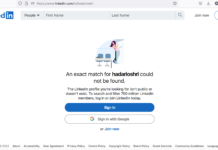
Read Hadari Oshri deactivates LinkedIn account following PPE exposé.
Read “A Special Report: The Harrowing Impunity of White-Collar Crime (Part I): Marc Lubaszka, the ultimate white-collar conman on the run: From a Hollywood Hills mansion to Venezuela’s illegal gold mines and back.” 
Read “A Special Report: The Harrowing Impunity of White-Collar Crime (Part II): Marc Lubaszka’s nonexistent private jets failed to deliver PPE amid the COVID-19 pandemic.”
Read “A Special Report: The Harrowing Impunity of White-Collar Crime (Part III): Pursuing flash money, rapper Dylan Raw partners with conman Marc Lubaszka and becomes his patsy.”
Read “A Special Report: The Harrowing Impunity of White-Collar Crime (Part IV): Hadari Oshri allegedly linked to attempted $370M nonexistent PPE COVID-19 scheme.”

SEC Charges Health Care Co. and Two Former Employees for Accounting Improprieties

FOR IMMEDIATE RELEASE
2022-31

Washington D.C., Feb. 22, 2022 — The Securities and Exchange Commission today announced settled charges and an $18 million penalty against Baxter International Inc. for engaging in improper intra-company foreign exchange transactions that resulted in the misstatement of the company’s net income. The SEC also announced settled charges against Baxter’s former treasurer and assistant treasurer, Scott Bohaboy and Jeffrey Schaible, respectively, for their misconduct related to these transactions.

The SEC’s order against Baxter finds that the company violated the negligence-based anti-fraud, reporting, books and records, and internal accounting controls provisions of the federal securities laws. From at least 1995 to 2019, Baxter used a convention to convert non-U.S. dollar denominated transactions and assets and liabilities on its financial statements that was not in accordance with U.S. GAAP or generally accepted accounting principles. Beginning in at least 2009, Baxter exploited the convention to enter into intra-company foreign exchange transactions for the sole purpose of generating foreign exchange accounting gains or avoiding foreign exchange accounting losses.

“It is critical that companies that identify wrongdoing proactively come forward and cooperate with the SEC staff,” said Paul Montoya, Associate Regional Director of the SEC’s Chicago Office. “Baxter’s self-reporting and substantial cooperation in working with the staff in this complex investigation was an important consideration in assessing the appropriate sanctions for this case.”

The SEC’s orders against Bohaboy and Schaible find that they violated the negligence-based anti-fraud provisions of the federal securities laws and caused Baxter’s reporting and books and records violations. According to the order against Schaible he, along with others working at his direction, was primarily responsible for executing the transactions. The SEC’s order against Bohaboy finds that he did not take any steps to investigate how Baxter’s treasury department generated consistent gains or whether the transactions that generated the gains were permissible.

Without admitting or denying the SEC’s findings, Baxter, Bohaboy, and Schaible consented to cease and desist from future violations. Bohaboy consented to pay a $125,000 civil penalty.  Schaible consented to pay a $100,000 civil penalty, disgorgement of $76,404 and prejudgment interest of $12,955. The settlement creates a fair fund for distribution of settlement proceeds to harmed investors.

The SEC’s investigation was conducted by Jen Peltz, Emily Rothblatt, Scott Hlavacek, Wilburn Saylor, Ann Tushaus, and Ariella Guardi, and was supervised by Jeffrey Shank and Paul Montoya.

*Press release distributed by the SEC.

Hadari Oshri allegedly linked to attempted $370M nonexistent PPE COVID-19 scheme

A Special Report: The Harrowing Impunity of White-Collar Crime (Part IV)

The attempted sales are also allegedly linked to conman Marc Lubaszka’s private jet company, Fly Private X, and convicted fraudster Arael Doolittle

AN IMPORTANT NOTE: On June 22, 2021, Hadari Oshri –Marc Lubaszka’s business partner– filed a civil harassment restraining order (CHRO) against Investor News reporter Aitana Vargas to stop the publication of her investigative series “A Special Report: The Harrowing Impunity of White-Collar crime,” and any subsequent installments or future media coverage. On August 3, 2021, Vargas filed an anti-SLAPP motion to strike Oshri’s CHRO petition. In a hearing held on September 13, 2021, Los Angeles Superior Court Judge Doreen Boxer granted Vargas’s anti-SLAPP motion and denied Oshri’s civil harassment petition for failure to sustain the applicable burden of proof. CA’s powerful anti-SLAPP statute demands that the prevailing defendant be granted attorney’s fees for filing a frivolous case. The Israeli entrepreneur also declined to go on a recorded interview or provide statements via email.

Hadaari Oshri Fly Private X scam with Marc Lubaszka
Screenshot of the Fly Private X online catalogue (publicly available).

Los Angeles, CA – As rapper Dylan Raw took on management roles at both Buy Gold Brightly and Fly Private X, and Marc Lubaszka’s imaginary assistant –Krista Collinsworth– stayed busy recruiting personnel for a private jet company with no jets, around 2020, the runaway broker welcomed a new entrepreneur to his team: Hadari Oshri, a 40-year-old from Israel with a wake of business casualties marching her path, including her many unpaid fashion fairies and ex-contractors from her signature yet defunct pet project: Xehar.

Hadari Oshri Xehar goes out of business many people unpaid
Screenshot from Open Corporates showing Xehar, Inc. was registered at El Segundo, CA. The company went under around the Fall of 2018.

Initially, the Lubaszka-Oshri axis may have seemed like the perfect business marriage. With his reputation tarnished by his previous gold scam, Lubaszka would be the brains of the new partnership and remain in the background. Meanwhile, Oshri –with her mini-skirts, oversized shades and guffawed laugh– would be the front person in charge of closing face-to-face deals with investors and clients. Despite their demonstrated history of defunct businesses, they must have thought that, together, they could rise above their many failures to build an empire from scratch, create a new army of fictional business characters and put their audacity and talent to work. All towards their ultimate goal: To make hundreds of millions of dollars by trying to sell PPE and private jets –or “jests,” as Oshri baptized them in court documents.

Indeed, their partnership seemed to be as timely as convenient. As COVID-19 ravaged countries and left a trail of desolation and deaths worldwide, some last-minute entrepreneurs were already capitalizing on other people’s desperation and suffering by promising to supply and ship by a certain date medical equipment they didn’t possess. And Lubaszka and Oshri needed to act quickly if they didn’t want to miss out on this rare opportunity.

“She wants to get on the bandwagon of whatever she thinks is selling,” says curvy model Cheyenne Lee, who worked for Oshri’s Xehar fashion fairy company until it came crashing down in the Fall of 2018. “I can already hear her voice in my head like ‘Oh my God! We are gonna make so much money! The pandemic is the greatest thing that ever happened, we are about to be rich!”

Seemingly unconcerned that law enforcement agencies had stepped up their efforts to aggressively prosecute fraudulent COVID-19 schemes, Fly Private X was ready to dive bomb into their newest illicit endeavor in an attempt to hit the PPE jackpot. And what better place to ride the lucrative wave of multimillion-dollar PPE sales than a luxurious beachfront property located in East Malibu –from where Hadari Oshri and Lubaszka were running their joint schemes for months, as shown by company filings, court documents and even one text message that, surprisingly, Oshri volunteered to me via email.

Lubaszka’s and Oshri’s business ties to sentenced PPE fraudster Arael Doolittle 

Around June 30, 2020, Alaa Hattab, CEO of Canada-based Saniton Corporation, was awaiting a shipment of 10 million medical examination quality nitrile gloves from Fly Private X that never materialized.

hadari oshri PPE fraud PO alaa hattab lubaszka fly private x dylan raw
In June 2020, Alaa Hattab attempted to buy $124M worth of PPE from Fly Private X. According to Hattab, the transaction was never completed because Fly Private X didn’t have the product.

The attempted $124.5M transaction was detailed in a PO (purchase order) that Hattab had sent to Lubaszka’s private jet company. Dissatisfied with the services rendered, Hattab referred to the Fly Private X team as “sketchy” and accused them of not having the PPE items they were trying to sell.

“The PO you (Aitana) are talking about was not completed. We were representing a client and sent a PO on the basis that they were buying from us. We were intermediaries in the transaction,” said Hattab in an email to me. “There was no product and the whole thing was a waste of time. Never proof of stock, always delays in getting us any sort of verification for products. It was a complete waste of time.”

Also on June 30, 2020, the now sentenced energy executive Arael Doolittle sent a PO to Fly Private X ordering 20 million boxes of nitrile gloves. But the jet company failed to deliver the PPE supplies, for which it was trying to collect $248M. Named in the PO was Bill Underwood, Doolittle’s attorney, who confirmed that the sale had gone South.

“I was involved in this transaction and it was not completed, which is the case with most of the PPE transactions that I have seen,” Underwood said in an email.

Although Doolittle’s attorney seemed to go easy on Oshri and Lubaszka for failing to deliver the promised PPE items, the POs that both his client and Hattab issued to Fly Private X contained misleading information: Both documents listed Oshri’s old Xehar warehouse in El Segundo (California) as the jet company’s offices. However, Oshri’s warehouse was vacated a few years ago and she no longer had ties to those offices. Neither did Lubaszka. It was, simply put, a smoke screen.

hadari oshri million ppe fraud

While no charges have been filed against Marc Lubaszka and Hadari Oshri for their dubious PPE operations, the POs obtained by this outlet also raise questions about the bigger role that the jet company and its representatives might have potentially played in a more elaborate PPE scheme across national and international borders.

In the meantime, in November 2020, Doolittle’s luck ran out. The businessman was charged with PPE fraud by the US Department of Justice for attempting to sell 50M nonexistent N95 masks to the Australian government. The fraudulent $317M transaction never materialized.

Doolittle pleaded guilty to wire fraud charges in 2021 and was ordered to serve a 54-month sentence in federal prison on February 16, 2022. As Judge Lynn N. Hughes handed down the sentence, he highlighted that despite “no actual financial loss in this case, there are still costs associated with cases like this that victims of frauds suffer.”

Judge Hughes’s opinion on PPE fraud is also echoed by other legal experts. According to a column published on the National Law Review site by Dr. Nick Oberheiden, a federal attorney who has defended clients in PPP loan fraud cases and COVID-19 investigations, PPE fraud can be construed as “promising to supply medical equipment or goods that the sellers do not have in order to capitalize on societal fear and make a profit at the expense of the emotional public sentiment.”

Hadari Oshri volunteered the POs linking both her and Fly Private X to a potential PPE scheme

When the news on Doolittle’s arrest broke in the Fall of 2020, it didn’t come as a surprise to Fergal Furlong, who already had first-hand knowledge that Oshri –with whom he had a contentious professional relationship at Xehar– had teamed up with Lubaszka in various ventures and that the 44-year-old gold broker had become her meal ticket.

In an exclusive interview at the beginning of 2021, Furlong explained that, around June 2020, Oshri was looking to hire a writer capable of placing promotional articles about Fly Private X in Forbes. But eventually, it also became clear to him that she played a key role in the jet company’s multimillion-dollar PPE operations. And it was Oshri who volunteered this information to Furlong.

Throughout 2020, Furlong demanded that Oshri start making payments as part of a $200K defamation and breach of contract settlement agreement that they had signed. To prove that she’d soon have the financial muscle to pay him, Oshri emailed him three POs totaling over $400M in attempted PPE sales that she claimed to be “working on” on behalf of Fly Private X. But the PPE sales were never completed, she failed to make any settlement payments and further tension set in between them.

Marc Lubaszka posed as an alleged attorney

Then, around June 2020, Furlong received an unexpected call from an alleged attorney who identified himself as “Marc,” wanted to clear the air and facilitate a payment plan between Oshri and Furlong. About two weeks later, Furlong and Marc met in a hotel in the oceanside city of Marina del Rey.

“Marc showed up dressed in a suit, wearing sandals and visibly drunk,” Furlong explained. “He looked like a complete mess.”

The self-proclaimed attorney stated that Oshri was broke, and instead of providing a payment plan, he offered Furlong multiple partnership opportunities that ranged from selling private jets to setting up gold websites and trading options. The meeting, however, ended abruptly when Furlong pulled out his phone and asked Marc about one of the POs that he’d received from Oshri showing Fly Private X’s involvement in attempted PPE sales.

“Marc just got up, then looked at me for a second, said he had to go and walked outside,” Furlong explains. “I had to pick up the breakfast tab.”

Minutes later, Furlong walked to the parking lot and headed to his car. “Marc was walking around, approached me and said: ‘You can’t be doing well if you’re driving that car.’”

This was the last time they saw each other. Yet blatantly unaware of how poorly the meeting had gone, Marc texted Furlong the same day to see how they could “work together” and asked for any correspondence between them to be delivered via email to his imaginary assistant, Krista Collinsworth, who responded to Furlong’s emails from a Fly Private X account, according to documents I had access to.

But by then, it was too late. Furlong had finally confirmed that the alleged attorney was small businessman Marc Lubaszka, and that he’d been working with Oshri for months.

“When I confronted him about his identity, Marc hung up on me, then called me a few minutes later and insisted that he was Marc Anderson,” Furlong explains.

By inventing a new persona, Lubaszka had just added another alias to the long list of pseudonyms and assumed personalities that he has used over the years to disguise his identity: From David to Anthony Cohen, Andrew Stevens, Scott Mason, British financier Jason Butler and deceased German-American philosopher Herbert Marcuse.

Indeed, in 2018, Marcuse must have risen from the dead to publish an ecstatic article on Medium to perpetuate the myth that Lubaszka had built a $100M real estate empire in Venezuela –a country the gold dealer survived in 2012 thanks to the humanitarian aid and free assistance provided by Venezuelan-Italian pastor Rubén Turtulici and his religious network. Needless to say, Marc Lubaszka’s piece, an obvious PR attempt to clear his name, was removed by Medium months ago.

Hadari Oshri incriminates herself in a multimillion-dollar PPE operation in legally recorded audio conversation 

Legally recorded phone conversations between Furlong and Oshri that I had access to before March 2021 show that the origin and authenticity of the POs was a highly contested topic between them in the summer of 2020.*

When Furlong pushed Oshri for honest answers, doubted the nature of the documents and raised questions about potential fraud, the Israeli entrepreneur stated that she had “made up” the POs in an attempt to get him off her back by showing that, as soon as she completed several multimillion-dollar transactions, she’d be able to pay him.

In the audio recordings, Oshri also claimed that she named Fly Private X on the POs because she “had to use a company name” and decided to list Lubaszka’s private jet company.

Oshri’s remarks above, however, contradict those made by Hattab and Doolittle’s attorney, who confirmed to me that the POs listing Fly private X’s attempted multimillion-dollar PPE transactions were, indeed, authentic.

Hadari Oshri’s PPE version in the recordings is not supported by her own PR campaign

More importantly, the version Oshri provided in the recordings is not supported by her own self-promotional claims in articles published in 2021 on several digital outlets, in which she portrayed herself as an expert on global supply chain and a successful PPE businesswoman.

*Read here a collection of Hadari Oshri’s online statements portraying herself as an expert in global supply chain and PPE. 

Hadari Oshri PPE Scheme
A screenshot of Hadari Oshri’s Facebook account linking to one of her stories about supply chain and PPE that she published on her Medium account.

“When the pandemic hit, she (Hadari Oshri) saw an opportunity to sell PPE,” says a story published on The Inscriber Magazine, her Medium account and her website. The article, written by her ghostwriter, Ryan Foland, went on to say that Oshri “has pivoted to helping hospitals and other organizations source much-needed medical supplies and PPE from suppliers around the world.”

A second piece authored by the Israeli businesswoman –yet written by Foland– that appeared in 2021 on Disrupt Global, her Medium account and her website stated that:

“Over the last year, in a world impacted by a global pandemic, I have seen buyers circumventing their brokers. I have heard clearly that sellers are not being 100% loyal to their brokers… I have seen people present sellers that are not sellers. Examples of this and other problems are common in the many PPE deals during the pandemic that blew up and never closed.”

Unsurprisingly, nowhere in these articles does Oshri mention that Hattab and convicted PPE fraudster Doolittle never received the supplies that she claimed to possess and tried to sell for over $370 million.

But in her desperate effort to dictate and impose her own PPE narrative, Oshri may have made a fatal mistake. In a legally recorded phone conversation with Furlong, she delivered statements that could potentially trigger criminal liability for the Israeli entrepreneur: That she was aware that she had committed PPE “fraud” and that she knew it was “wrong.”

“In an attempt to hide Marc’s involvement, defend her business partner and avoid any potential investigation into him and his dealings, she told me that she made up the POs. But she didn’t. They were real,” Furlong explains.

Victims still waiting for justice

The POs that Oshri volunteered to Furlong amount to over $370M –an amount significantly higher than the $317M worth of nonexistent PPE that Doolittle fraudulently attempted to sell to a foreign government, for which he was criminally charged and recently ordered to serve a 54-month sentence in federal prison.

Why Lubaszka and Oshri remain untouched is a question that only law enforcement can answer, but one that lingers to this date and that, for years, their many victims have demanded to know.

“I just want to see some form of justice,” regrets Gern. “After so many years, you start losing all hope. How come these guys don’t get caught and prosecuted? What else needs to happen?”

Gern’s sentiment is also shared by other victims of Lubaszka. 78-year-old David Coonrod, who lost over $17,000 with the gold broker nearly ten years ago, is still hopelessly awaiting some form of closure.

“Your publication (Aitana) may be the only satisfaction any of us ever receive,” he regrets.

Don’t miss the next installments of this investigative series: Hadari Oshri Exposed: From questionable PPE operations through her company, Trade Safe Pro, to a failed fashion fairy empire that collapsed leaving behind a trail of unpaid models and workers.

*The audio recordings between Furlong and Oshri were made with Oshri’s consent and upon her request. 

**If you’d like to share your testimony or story, please contact the reporter at aitana_investigations@protonmail.com or connect with her on Facebook. All emails are checked for legitimacy, spam and viruses and deleted when suspicious malware is detected. 

***Lubaszka never responded to requests for comment.

Read here Part I, Part II and Part III of this series.

Story originally published on Feb. 22nd, 2022. Updated June 12, 2026.

RELATED COVERAGE

Read Aitana Vargas’s exposé on Hadari Oshri nominated for journalism award.

Read “A Special Report: The Harrowing Impunity of White-Collar Crime (Part I): Marc Lubaszka, the ultimate white-collar conman on the run: From a Hollywood Hills mansion to Venezuela’s illegal gold mines and back.” 

Read “A Special Report: The Harrowing Impunity of White-Collar Crime (Part II): Marc Lubaszka’s nonexistent private jets failed to deliver PPE amid the COVID-19 pandemic.”

Read “A Special Report: The Harrowing Impunity of White-Collar Crime (Part III): Pursuing flash money, rapper Dylan Raw partners with conman Marc Lubaszka and becomes his patsy.”

Read 2019 court case against Hadari Oshri exposes her dodgy, aggressive legal maneuvers.

Read Hadari Oshri’s losses mount up as she fails again to silence her victims.

Read Hadari Oshri loses anti-SLAPP court battle against journalist Aitana Vargas.

Read The Legal Bullies Club – The SLAPPers: Featuring Hadari Oshri.

Read Hadari Oshri sued for copyright infringement in 2017.

Read La reportera Aitana Vargas pide 23.000 dólares en honorarios tras pulverizar la querella mordaza de Hadari Oshri.

Read Hadari Oshri deactivates LinkedIn account following PPE exposé.

Arael Doolittle sentenced for $317 million N95 mask scam

covid recession

(HOUSTON) – A 56-year-old Houston resident has been ordered to federal prison for scheming to fraudulently sell 50 million non-existent N95 facemasks to the Australian government, announced U.S. Attorney Jennifer B. Lowery.

Arael Doolittle pleaded guilty July 27, 2021.

Today, U.S. District Judge Lynn N. Hughes ordered him to serve a 54-month sentence. At the hearing, the court heard additional evidence that Doolittle had stolen another person’s identity and forged their signature during the commission of the offense. In handing down the sentence, Judge Hughes noted even though there was no actual financial loss in this case, there are still costs associated with cases like this that victims of frauds suffer.

In early April 2020, Doolittle attempted to sell 50 million 3M N95 respirator masks to the government of Australia. However, he actually did not possess them.

The Australian government was supposed to pay over $317 million for the masks, but authorities disrupted the transaction before it was completed.

Doolittle was also charged and convicted in a separate case for conspiracy to commit wire fraud. In that scheme, he solicited victims to invest in a petroleum trading company. However, Doolittle did not invest their money as promised. He actually used the funds to finance unrelated business and personal expenses. Doolittle defrauded the victims of this petroleum trading scheme out of a total of $1,935,613.95. He was previously ordered to serve a 54-month sentence.

The two sentences are ordered to be served consecutively, resulting in a total of 108 months in prison.

Doolittle has been and will remain in custody pending transfer to a U.S. Bureau of Prisons facility to be determined in the near future.

The Secret Service conducted the investigation of the fraudulent N95 masks. Assistant U.S. Attorney Justin R. Martin prosecuted the case. The FBI investigated the petroleum investment scheme.

On May 17, the Attorney General established the COVID-19 Fraud Enforcement Task Force to marshal the resources of the Department of Justice in partnership with agencies across government to enhance efforts to combat and prevent pandemic-related fraud. The task force bolsters efforts to investigate and prosecute the most culpable domestic and international criminal actors and assists agencies tasked with administering relief programs to prevent fraud by, among other methods, augmenting and incorporating existing coordination mechanisms, identifying resources and techniques to uncover fraudulent actors and their schemes and sharing and harnessing information and insights gained from prior enforcement efforts. For more information on the Department’s response to the pandemic – https://www.justice.gov/coronavirus.

Anyone with information about allegations of attempted fraud involving COVID-19 can report it by calling the Department of Justice’s National Center for Disaster Fraud (NCDF) Hotline at 866-720-5721 or via the NCDF Web Complaint Form.

*Official press release.

BlockFi Agrees to Pay $100 Million in Penalties and Pursue Registration of its Crypto Lending Product

KaratCoin Cryptocurrency

Company also agrees to attempt to bring its business into compliance with the Investment Company Act of 1940 within 60 days

FOR IMMEDIATE RELEASE
2022-26

Washington D.C., Feb. 14, 2022 — The Securities and Exchange Commission today charged BlockFi Lending LLC (BlockFi) with failing to register the offers and sales of its retail crypto lending product. In this first-of-its-kind action, the SEC also charged BlockFi with violating the registration provisions of the Investment Company Act of 1940. To settle the SEC’s charges, BlockFi agreed to pay a $50 million penalty, cease its unregistered offers and sales of the lending product, BlockFi Interest Accounts (BIAs), and attempt to bring its business within the provisions of the Investment Company Act within 60 days. BlockFi’s parent company also announced that it intends to register under the Securities Act of 1933 the offer and sale of a new lending product. In parallel actions announced today, BlockFi agreed to pay an additional $50 million in fines to 32 states to settle similar charges.

“This is the first case of its kind with respect to crypto lending platforms,” SEC Chair Gary Gensler said. “Today’s settlement makes clear that crypto markets must comply with time-tested securities laws, such as the Securities Act of 1933 and the Investment Company Act of 1940. It further demonstrates the Commission’s willingness to work with crypto platforms to determine how they can come into compliance with those laws. I’d like to thank and commend our remarkable SEC staff and state regulators for their efforts and collaboration on this settlement.”

“Crypto lending platforms offering securities like BlockFi’s BIAs should take immediate notice of today’s resolution and come into compliance with the federal securities laws,” said Gurbir S. Grewal, Director of the SEC’s Division of Enforcement. “Adherence to our registration and disclosure requirements is critical to providing investors with the information and transparency they need to make well-informed investment decisions in the crypto asset space.”

According to the SEC’s order, from March 4, 2019 until today, BlockFi offered and sold BIAs to the public. Through BIAs, investors lent crypto assets to BlockFi in exchange for the company’s promise to provide a variable monthly interest payment. The order finds that BIAs are securities under applicable law, and the company therefore was required to register its offers and sales of BIAs but failed to do so or to qualify for an exemption from SEC registration. Additionally, the order finds that BlockFi operated for more than 18 months as an unregistered investment company because it issued securities and also held more than 40 percent of its total assets, excluding cash, in investment securities, including loans of crypto assets to institutional borrowers.

The order also finds that BlockFi made a false and misleading statement for more than two years on its website concerning the level of risk in its loan portfolio and lending activity.

Without admitting or denying the SEC’s findings, BlockFi agreed to a cease-and-desist order prohibiting it from violating the registration and antifraud provisions of the Securities Act and the registration provisions of the Investment Company Act. BlockFi also agreed to cease offering or selling BIAs in the United States.

The SEC’s investigation was conducted by Gwen Licardo, Craig Welter, and Kenneth Gottlieb, with assistance from Brent W. Wilner, under the supervision of Hane L. Kim, Chief of the Retail Strategy Task Force; Lara Shalov Mehraban, Associate Regional Director of the SEC’s New York Regional Office; and Kristina Littman, Chief of the Cyber Unit. The SEC appreciates the assistance of state regulators that are members of the North American Securities Administrators Association.

The SEC’s Office of Investor Education and Advocacy and Enforcement’s Retail Strategy Task Force has issued an Investor Bulletin on Crypto Asset Interest-bearing Accounts. Investors can find additional information about crypto assets at Investor.gov.

Press release distributed by the SEC.

FC Barcelona Cancels Marketing Agreement With NFT Marketplace Ownix

FC Barcelona Cancels Marketing Agreement With NFT Marketplace Ownix

But the soccer powerhouse is still scheduled to launch an NFT collection on the Ownix platform next week.

FC Barcelona cancelled a marketing deal with non-fungible token (NFT) marketplace Ownix on Thursday. The decision comes less than five days before the soccer powerhouse is scheduled to auction its first NFT collection through the platform.

The Associated Press and other publications reported that the cancellation followed the arrest earlier Thursday of Israeli crypto mogul Moshe Hogeg on fraud involving cryptocurrencies and assault charges. The publications also reported that Hogeg has ties to Ownix, which operates on the Ethereum blockchain. Hogeg lists the company in the Interests section of his LinkedIn profile.

“In light of information received today that goes against the Club’s values, FC Barcelona hereby communicate the cancellation of the contract to create and market NFT digital assets with Ownix with immediate effect,” the club said in a statement on its website.

At the time of publication, the club had not responded to CoinDesk requests for comment.

Announced just 15 days ago, the FC Barcelona NFT auction based on photos and videos from the club’s 122-year history is slated to take place on Nov. 24, according to a countdown timer on the Ownix website. The launch will feature remarks from Joan Laporta, who took over as FC Barcelona president earlier this year and other “key members” of the club, an email from an FC Barcelona representative to CoinDesk said.

Barça, as the team is known, is second in value only to Spanish rival Real Madrid, according to a ranking by Brand Finance, which said the team might drop down the ladder because of the departure of star striker Lionel Messi – who has his own NFT collection – for Paris St. Germain in a deal that also included NFTs.

Sports teams worldwide have been exploring NFTs as a way of generating income and raising fan engagement. FC Barcelona has faced severe financial issues in recent years with its CEO Ferran Reverter telling reporters in October that the club was “technically bankrupt” earlier this year and would have been “dissolved” if it had been a public limited company (PLC).

Bitcoin Attempts Price Recovery After a Derivatives-Led Slide to Sub-$56K

bitcoin back 2019

Bitcoin Attempts Price Recovery After a Derivatives-Led Slide to Sub-$56K

Fears about a supply glut from the Mt. Gox settlement are unfounded, one analyst said.

Bitcoin is looking to regain its footing, having reached five-week lows early Friday in a move market participants said was driven by derivatives.

The top cryptocurrency had recovered to $57,200 at press time from the low of $55,666 reached during the early European trading hours. That was the lowest level since Oct. 13.

The early drop was predominantly driven by traders taking short positions in the perpetual futures market, according to Ki Young Ju, CEO of blockchain analytics platform CryptoQuant. “The market sentiment was sell, according to the taker buy-sell ratio,” Ju said. “More people were shorting bitcoin via market orders.

The taker buy-sell ratio is the ratio of buy volume divided by the sell volume of takers in perpetual swap trades in all derivative exchanges. Individual investors, small firms are referred to as price takers. Former Secretary of State Hillary Clinton calling cryptocurrencies a destabilizing force at a Bloomberg event may have triggered selling.

Daniel Kukan, senior cryptocurrency trader at Swiss-based Crypto Finance AG, said, “We did not see big sellers at all; the move was derivatives driven.”

Noelle Acheson, head of market insights at Genesis Global Trading, attributed the recent slide from record highs near $69,000 to fears that the finalization of settlement claims against defunct crypto exchange Mt. Gox and resolution of the ongoing court battle between Ira Kleiman and Craig Wright for rights to Satoshi Nakamoto’s 1.1 million BTC wallet may bring selling pressure to the market.

Acheson, however, said that these fears are unfounded. “The timing [of the Mt. Gox settlement] is still unclear and could be in 2022 or even 2023. Also, many of the claim holders are hedge funds that may or may not choose to sell,” Acheson said.

Regarding the court battle, Acheson said a win for plaintiff Kleiman is unlikely to lead to the release of a significant portion of the locked coins as feared by some traders. That’s because the defendant has failed to produce evidence of having access to the BTC in question, even should he lose.

Data tracked by Glassnode shows no signs of panic selling by long-term investors. Supply owned by long-term holders has declined by just 26,461 bitcoin since Nov. 10., representing a meager 0.19% of their balance, according to Glassnode data. Bitcoin’s liquid supply has decreased by 145,000 BTC over the past 30 days.

Meanwhile, data shared by IntoTheBlock shows more than 20,000 coins have left centralized exchanges in the past seven days.

“Fears of selling pressure appear to be more of a justification than a reason for the market correction, which has the characteristics of a normal breather to a bull run and a healthy reduction of leverage,” Acheson noted.